Diplomacy by Design-How the U.S. Flexed Its Global Clout Without Firing a Shot.

The backdrop: a familiar yet volatile standoff between the two nuclear-armed neighbors India and Pakistan. The world braced for escalation; but as the situation teetered towards volatility, the U.S. Vice President JD Vance made a seemingly flippant remark, calling the conflict between both the nuclear-armed neighbors “none of our business.” To the untrained eye, it was a shrug. But to those who read between the lines, it was calibrated restraint— a move to lower the diplomatic temperature, creating space for behind-the-scenes maneuvering while publicly avoiding entanglement,
Almost concurrently, the International Monetary Fund, approved a $2.4 billion bailout for Pakistan. Ostensibly a move to support economic reform and climate resilience, the timing was conspicuous. This lifeline, dressed in the language of economic reform and climate resilience, came at a moment when Pakistan needed both financial stability and international legitimacy. It was a well-timed olive branch. Still, the IMF’s alignment with American influence is no secret. For regional watchers, the subtext was clear: the bailout was as much about stability as it was about solvency.
But the crescendo came from an unexpected corner, the pièce de résistance-U.S. President Donald Trump stepping into the fray to announce a ceasefire. Whether American diplomats brokered it behind closed doors remains speculative, but the optics were clear. Trump seized the spotlight, framing himself as a global statesman while projecting U.S. power in the role of mediator—not enforcer, and in doing so, the US once again appeared as the indispensable nation.
What looked like disparate events—a dismissive soundbite, a financial rescue, a dramatic headline-grabbing announcement—began to resemble a deliberate and tightly orchestrated symphony of diplomatic strategy.
The U.S. didn’t have to issue threats or deploy forces. Instead, it leveraged influence, institutions, and individual personas to steer outcomes. The genius lies in the indirectness. There were no warships, no ultimatums. Just institutional power, narrative framing, and plausible deniability.
It’s a potent reminder: how power operates in the modern age. In the modern age, real power often doesn’t wear a uniform. No boots on the ground. No saber-rattling. Its subtle, institutional, and often invisible. Just strategic restraint, soft leverage, and plausible deniability. It whispers through institutions, maneuvers via multilateral forum, and lets others take the credit. In diplomacy, silence isn’t weakness—it’s often the loudest form of strength.
P.S. : The writer offers a discretionary, interpretive analysis rather than a strictly objective report—blending factual events with strategic inference and narrative framing.
Gandhi Jayanti and Mockery of Justice

 Happy Gandhi Jayanti.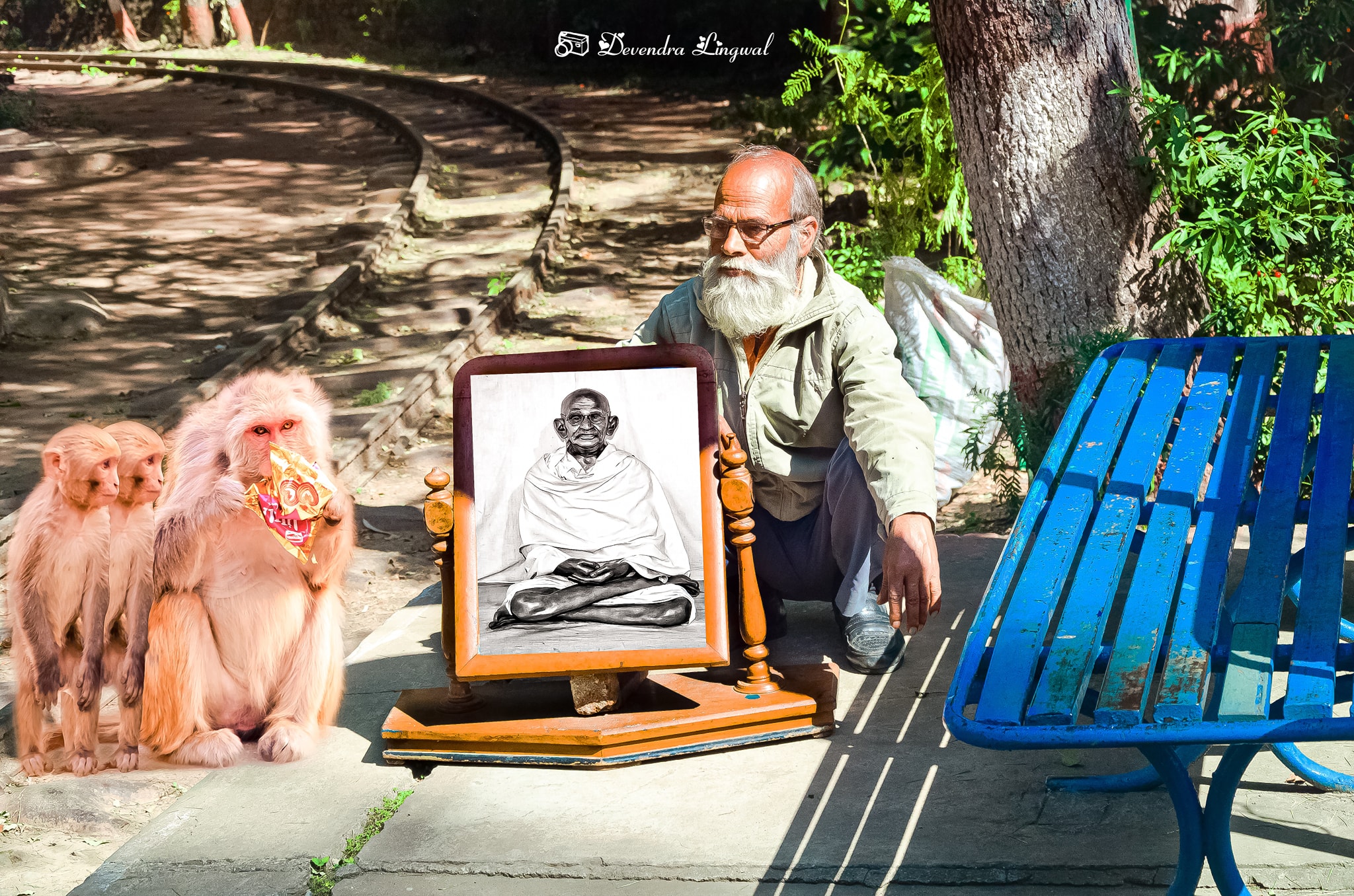
Fighting the gloomy days-A tough call to take

Religious Discords - Mazhab Nahi Sikhata Aapas Mein Bair Rakhna
A religion is a set of beliefs that is passionately held by a group of people that is reflected in a world view and in expected beliefs and actions. Each religion also has a "moral code" which is a set of beliefs about how humans should act. Will not be picking up a detailed discussion over God and Human Spirit, but yes the major thing to discuss over is morality. "Morals" are the way a human behaves to other humans. Most religions make rules about human morals. The rules of how people should act to each other are different in different religions. Almost for every religion, following a "path" of goodness, truth and duty is very important, while not every religion teaches people to be kind to all other people. In many religions, it has been common for people to believe that they have to act kindly only to some people and not to others.
Martin Luther King Jr. said, ‘There comes a time when silence is betrayal. Our lives begin to end the day we become silent about things that matter’. Many of our irrational orthodox rituals and practices such as ‘Sati’ got abolished not by the elite religious preachers, not by the hard core disciples but by those who stood against these irrational practices as the reformers. The entire world has witnessed several revolts, reforms and campaigns from time to time. One of the latest reforms in today’s digital era is the #metoo against sexual harassment and sexual assault of women.
Toot kar khamosh wahi hota hai jo beh kar dariya nahi hota ~ Devendra Lingwal
Toot kar khamosh wahi hota hai jo beh kar dariya nahi hota.
Zindagi koyi jheel nahi jise ghamo k kinare baandh kar baithe rahein umr bhar,
Zindagi wo sagar bhi nahi jismein ghamon k daur k kinare na hon
jo apni hi mauj mein janib-e-manzil behta rehta hai, behta rehta hai
Zindagi to khushiyon aur ghamon ki nadiyon se bana ek dariya hai,
Kaun kehta hai ki zindagi ka dariya paar nahi hota,
Toot kar khamosh wahi hota hai jo beh kar dariya nahi hota. -- © Devendra Lingwal
Kal ki Raat
Sehme-sehme kadmo se haule-haule aage badhti maut
apne ghoonghat k pat khol rahi thi.
Apne rukhsar se mayoosiyat ki laton ko hata,
wo bala ki khoobsoorati apne andar samet rahi thi.
Mujh se bhi haseen koyi aur mila hai kabhi?
Maut, kal tak tujh se bhi haseen thi meri zindagi.
Aur zindagi se haseen tha wo shakhs jo,
Kal ki raat mujhe tere aagosh mein chhod gaya.
Kal ki raat use paa kar koyi bahut khush tha,
Kal ki raat kisi par bahut bhari thi,
Kal ki raat fir ek baar zindagi maut se haari thi.
Kal ki hi raat mujhe saza-e-maut huyi thi.
© Devendra Lingwal
The Ordinary 'Me'

A War With 'Me'

Family Values-are they still significant

Do parents play an important role in the education of their child?

Path to Information - RTI Act

Under the RTI Act the responsibility of a public authority and its public information officers (PlO) is not confined to furnish the information asked for; but they also have to provide necessary help to the information seeker wherever necessary. While providing information or rendering help to a person, it is important to be courteous to the information seeker and to respect his dignity. This way RTI was meant to sweep the cobwebs of corruption away from India’s opaque governance bringing transparency and accountability.
But under the so called pompous Indian officialdom’s ability to camouflage things within itself it would not be a news of great surprise that as per a study of National Right to Information Awards Secretariat a person has only a 39 percent chance of getting information sought under the highly glorified Right to Information Act (RTI). Various reasons tantamount to fabrication are often cited for not revealing the information by those who feel that their reputation could be sullied by the RTI Act.
As the Public Information Officer (PIO) and the First Appellate Authority are from the same public authority and there isn’t much difference in the echelon of the designations therefore the chances of getting the information in a prevaricated manner can’t be ruled out.
The much hyped RTI Act has no doubt some flaws within. The maximum time limit of 30 days each given to the Public Information Officer (PIO) and the First Appellate Authority leaves the information seeker with Hobson’s choice of waiting for the reply till the stipulated period expires. The concerned officers who are bound to provide the information under the RTI Act but do not do same or who reply in a prevaricated manner are rarely penalised as per the Act.
Another reason which hampers the RTI Act to unleash its effect is that around 60% of the Public Information Officers have had no training in RTI and also there is lack of awareness of RTI Act among the public.
The Department of Personnel and Training (DoPT), Ministry of Personnel, Public Grievances and Pensions, Government of India (GoI) has launched an 'Online Certificate Course on RTI' for various stakeholders on, both, the demand and supply sides of the RTI implementation regime. This Online Certificate Course on RTI is launched in association with the Centre for Good Governance, Hyderabad. This Online Certificate Course is aimed at Public Information Officers (PIOs), Assistant Public Information Officers (APIOs), Appellate Authorities, Officials assisting the above designated officers or other public officials, Citizens, Representative of Civil Society Organisations (including Media Organisations), any other person(s) who could be a direct / indirect stakeholder. The objectives of this course are to reach out to those who have not had an opportunity to participate in any training / sensitisation initiatives on RTI Act 2005, bringing greater clarity on RTI among designated implementing officials (i.e. APIOs / PIOs / FAOs), ensuring appreciation for RTI Act 2005 and its mandate among the officials designated under it and also among the citizens, facilitating timely delivery of information by PIO and having better informed citizens, civil society and other stakeholders.
The proposed outcome of this course are a sound knowledge of the provisions of the RTI Act 2005 among the people taking this course, good understanding of the roles and responsibilities of organisations / persons concerned with implementing the law and with enforcing the rights under this law, proper appreciation of rights / obligations – as applicable – for effective use of this right, reliable guidance on following the right process / procedure to implement the provisions of this Act and to benefit from this Act, good understanding of remedies available when an implementing organisation fails to comply with this Act, testing the understanding of 'Information Providers' and 'Information Seekers' using this tool for implementing this Act or exercising their right under it. A certificate for learners of this course on its successful completion is also awarded as an incentive.
The initiative taken by the Department of Personnel and Training (DoPT), Ministry of Personnel, Public Grievances and Pensions, Government of India (GoI) to create awareness of RTI Act among the nationals of India is being seen as a step of mutation to immaculate corruption.
The government must realise that eventually it will have no other option than to bring transparency in its system.
Labour Day

But the lament thing is that the Labor laws failed to bring one of the preponderant sections of the labour community from the morass of exploitation to the state of euphoria. This section which is tagged as “Child Labour” is still the preference amongst the labour class.
Child labor is a punishable crime in India and many other countries. Indian Govt. has imposed complete ban on child labor. Article 24 of the Indian Constitution clearly states that “No Child below the age of 14 shall be employed to work in any factory or mines or employed in any hazardous employment. Recently domestic work and hospitality industries are also covered in this Act.
But still there are myriads of children who are working on roadside food stalls, factories, cleaning shops/garage, hospitals, hotels, restaurants, dhabas and as domestic work. Despite a complete ban by the Indian government on the working of children below 14 years of age as domestic servants, the abysmal thing is that still this practice is not being brought to an end.
One of the basic reasons is; such children belong to the families who are facing penury hence they prove to be worthy in generating extra income for their families. They are the first choice of the employer as it’s quite easy to exploit them. These children don’t demand high wages and are ready to perpetually work for long hours and that too without protesting as compared to a skilled worker. Moreover they don’t switch over to other jobs easily. According to a study, about 200,000 child workers are estimated to be working as domestic servants and other activities. It’s not only shocking news but it also represents an abysmal picture of the improper functioning of the Government bodies related to social welfare.
Government has launched several programmes to eradicate Child labor but these programmes render little help. The Child labor (Prohibition & Regulation) ACT 1986 is one such a step in this direction. But these laws are being enforced only on papers and have no impact in the real life; the situation is totally different at ground levels. There are many flaws in these Acts and due to these flaws the employers find a way to escape from the grasp of law. There is provision in Act that, “No child below the age of 14 shall be employed to work.” But what if they are working willingly?
When asked from the domestic employers, the employers repudiate the statement of employing a child for domestic help. They are very well aware of the fact that engaging child labor is a cognizable offense hence hesitates in accepting the fact. They add that when these children are working willingly what can they do? They haven’t forced these children to work.
But on contrary in some cases the parents force their children to work. These children are bereft for their basic right of education by their parents.
Myriads of children spend their midday sweat, their midnight oil; they tire the night in thoughts, their day in toil. What do these children want from us? They want more schoolhouses and less jails; more books and less arsenals; more learning and less vice; more leisure and less greed; more justice and less revenge; in fact, more of the opportunities to cultivate their better natures.
The problem of child labor is broadening equally in all parts of our country. It’s not limited up to urban areas; rural areas are also beneath its hold. The most exploitative form of child labor includes child prostitution. The situation of girl child laborer is far worse in such cases. The agents of these children allure the parents to send their child with them for the sake of money. And after that these children are thrust into Prostitution work. It’s in fact the most shameful act that these unfortunate children have been treated as commodities.
Begging is yet another dark face of child labor. Agent’s picks children form slum areas and force them to work as beggars.
So what is the significance of Labor Day to these deprived child workers? Nothing is the most appropriate answer to this. Government must establish a National Trust to help these poor children financially, as poverty is the root cause of child labor. We also have to cut down the role of illiteracy. Education reduces the chance of being prone to exploitation. Govt. must have to take stern actions against those who rupture these Acts. Govt. is trying to remove child labor on its part. But the help of every individual is awaited. Every citizen must have to work with Government in this direction. Only by entrusting responsibilities to Government doesn’t solve the matter. We too have to understand our onus.
No one can abolish this evil in overnight, single handed. Only the joint efforts by Government and individuals can eradicate this evil, not only from our nation but also from the world.
From each point of view, child labor is not at all justified. It is said that Children are the backbone and the future of nation. If given an opportunity, these child labors too can outshine as Doctors, Engineers and Architects and can serve the nation in a better way. Only our joint & constant effort can eliminate Child labor.
Guns of India

We believe that punishment should be proportional to a crime. Prima facie, police organization who is believed to be the watch dog shakes it’s legs only after the occurrence of the crime. Stringent security measures are followed only on the visits of VIPs and that too for their protection or after the occurrence of an incident which poses threat to the national security. The police organization has breached the public trust because of which people are leading a tensed life with despair of a crime free environment; hence despite of a large police organization that is deployed to prevent the occurrence of crime, more and more people are applying for the license for a legal weapon under arms act for self-defense and the reasons are legitimate enough to be worked on.
On the other hand we can’t refute the occurrence of incidents related to the flouting of arms act where procuring and misusing of licensed weapons is a matter of pride for the people who are affluent or bully by nature. Reports of 'accidental' shooting of revelers by licensed weapons at weddings are amongst the most common ones.
Assassinating the assassin
I am writing nothing new, many of the eminent writers have written and are going to write on the life of the criminals, the aftermaths of crime and the list of the topics are ever ending, many of the readers have culled out such writings in order to win fabulous prizes in various competitions.
A thing may be that I should write on "Living with the assassin". Despite knowing that the husband is an assassin, how is the wife able to cope a normal life and prove to be a homemaker. How are the children of the assassins treated in the world and many such questions now and then striking in our mind?
Are the assassins who show remorse for what they did, treated as normal humans after their retributive sentence by the laws are over?
Like in the case of Nalini Murugan (the “accused no. 1” in the Rajiv Gandhi assassination case); in between serving a prison term and fighting a legal battle for an entry permit into India for her daughter, Megara (15), Nalini, a graduate before she was convicted as the ‘back-up human bomb in the event of Dhanu failing in her mission‘, has been pursuing her MCA studies at the special camp for women in the Vellore prison.
Nalini and her husband (Sriharan alias Murugan), are pursuing their Master’s in Computer Applications from the Indira Gandhi National Open University (IGNOU). The counselor rated Murugan, as the “most brilliant” student. “Murugan has got very high scores so far. I have not seen such high scores even in the case of students outside,” said Srinivasan the IGNOU Consellor, running his eyes through the marks sheet available on the IGNOU website.
Despite accepting Murugan's and his wife Nalini's excellent intellect and the fact that they both are now MCA, will the world respect them as computer engineers or will the credence of the world still treat them as social stigmas?
We all have a pragmatic vision to seek and see justice done. Throughout history and in many places around the world today, individuals take the need to chastise those who have committed crimes into their own hands. The societies that practice vigilante justice do so because there is no central system to deliver justice for them, or if there is, it is corrupt and worthless. In our society we believe all criminals should have the right to a fair trial before paying for their crimes. We also believe that punishment should be proportional to a crime. For these reasons we collectively entrust the responsibility of sentencing and retribution to our government institutions.
Our society has enabled our government to carry out the task of administering retribution on behalf of its citizens. Why then has the principle of retribution fallen by the wayside in determining appropriate sentences? Sentencing for the sake of retribution has lost all clout, brushed aside as a primitive instinct. In reality, this innate desire to see criminals pay a price for their crimes is central to our humanity. It is a justifiable objective in sentencing. Is it being delivered? A quick glance at our present system tells us it is not.
Specific deterrence is the idea that a sentence will keep the offender in question from re-offending. General deterrence is the idea that tough sentencing will dissuade future law-breakers.
The first and foremost step in retribution system is to rehabilitate the criminals in the society in order to reduce the recidivism present in them to zero.
We mostly hear about the huge number of rehabilitation programs but seldom do we hear about the results these programs produce.
Sympathizing with a criminal in the prison visiting room is like sympathizing with the deadliest beast caged inside its bars at the Zoo. Its safe enough there, but you don’t want to meet either of them in their natural habitat. Molestation in childhood, poverty and discrimination- something twisted in their brains. What kept them from being a normal human being? For them criminality then becomes a self-fulfilling prophecy.
But the decision to change, to do the right thing, ultimately comes from within. A soldier bonded to his peer group would fight valiantly on their behalf when he might have given up if he was alone on the battlefield.
You can reason with a criminal, particularly a professional criminal, who is the ultimate pragmatist. The implicit statement when a criminal is taken at gunpoint is, ‘cease your assaulting behavior or die.’
This does not work for the religiously as opposed to politically motivated terrorist. The religious fanatic who practices terrorism cannot be reasoned with, because there is nothing you can threaten him with, and no alternative you can offer him that is more palatable than his genuine belief that if he dies fighting you, he will be greatly rewarded in afterlife. Only swift and extreme force can stop him.
Plainly we do know what the problem is; the offender's anti-social behavior but we have only the faintest idea of how to correct the problem. The current rehabilitative efforts had no appreciable effect on recidivism.
All the criminals need an identity shift when released again in the society. After conducting further research, studies in several prisons have indicated that recidivism rates have declined where inmates have received an appropriate education helping their social skills, artistic development. This same study provided a critical analysis that showed that; a program’s success or failure is hampered by values and attitudes of those in the authority position, over crowded prison population conditions and inadequate funding for teaching personnel, supplies and materials
As per these studies it is highly apparent that given the right attitude by personnel and a dedicated effort by those in authority, along with points made in this previous study, educational rehabilitation effects on criminal recidivism shows a positive correlations in terms of reduction.
The rehabilitation program should help connect people released from prison and jail to mental health and substance abuse treatment, expand job training and placement services and facilitate transitional housing and case management services.
In conclusion, educational rehabilitation, substance abuse treatment programs and the family all must unite in the previously incarcerated person's life to assist him or her in getting back on or starting the right path. That path is a crime free, employed, and engaged citizen, father and/or leader in the family and community.
Now, I am not saying that all criminals, given the right opportunities and support, will become industrious members of society. But effective rehabilitation programs are surely going to act as a sight for sore eyes for the despairs of all the delinquents.
Impossible is a word only to be found in the dictionary of fools
The world is divided into two classes: those who believe the incredible, and those who do the improbable. The former is often addressed as an imbecile and the latter who apply themselves wholly and indefatigably to their ambitions are omnipotent and are awarded the epithet of “innovators”.
“Where there is a will there is a way,” is an old and true saying and even if there isn‘t a way either I‘ll find it or make one should be the theme of our will .
The fools keep on talking about impossible because they fear to face the failure. To face success one needs a heart to face the failures. For once the failure is tasted; the fear of facing it goes off. We get the strength to take the risks more easily. We’ll not want to snuggle in our comfort zone anymore-we will be ready to fly. And success is about flying, not snuggling.
Electricity and light bulb were impossibilities. Humans safe passage through the sky was unfeasible. But Thomas Edison, the Wright Brothers went and did it anyway. Things are impossible only because we perceive them to be impossible. The world makes a way for a man who knows where he is going.
Now it’s our turn to begin our own dynasty-one that brings us greater fulfillment while simultaneously providing immense value to the world around us.
Injustice with the Name for Fame
Kala Pani- The polluted water bodies
As per a Central Pollution Control Board (CPCB) action plan the factories cannot dump effluents in the rivers and rivulets but have to send it to a common effluent treatment plant (CETP). But hundreds of industrial units do not treat their wastes as per the inlet parameters of the CETP, and are releasing untreated effluents into the rivers and rivulets. And what say about those areas which are not having any such common effluent treatment plants or about those areas where the effluents and the other hazardous wastes not find any river, rivulet and thus remain accumulated posing serious threats to the life of many residents of that area.
There are myriads of stories like these that go unheard. Invariably, those worst hit by industrial pollution are either rural folk who are unaware of its effects or workers who earn their living from the polluting factories. But more than the polluting industrial units, the blame goes to regulatory agencies — state pollution control boards (SPCBs) and state industrial development corporations — that were created to control and monitor industrialization. Instead, these agencies have been reduced to mere rubber stamps to promote industrialization at a frenzied pace. The industrial system has been reduced to a state wherein it makes better business sense for industrialists to carelessly dump hazardous waste rather than set up mechanisms to deal with it.
Although people are gradually realizing that pollution is leading their lives to predicament, they are not reacting the way they should, considering that their very lives are at stake. The spirit of public good that saw numerous people going to court against polluting industry has been snuffed out after implementing agencies failed to enact the orders of the courts.
Aren’t we behaving like egocentrics, for our self interest we are releasing the poisonous effluents into the natural water bodies and when we realize that these polluted water bodies are posing great threats to our lives, we plan to clean them. Why it’s only the NGOs taking the initiative to clean these polluted water bodies, why not our government and why not each and every individual? When the rules are stringent then why the implementing agencies are being lackadaisical in it’s implementation? Why does the government needs to face the strong revolt by the people to shake their legs?
If each and everyone of us are able to understand our responsibilities then the day is not far when we won’t have to face the industrial turmoil.
Path to Success
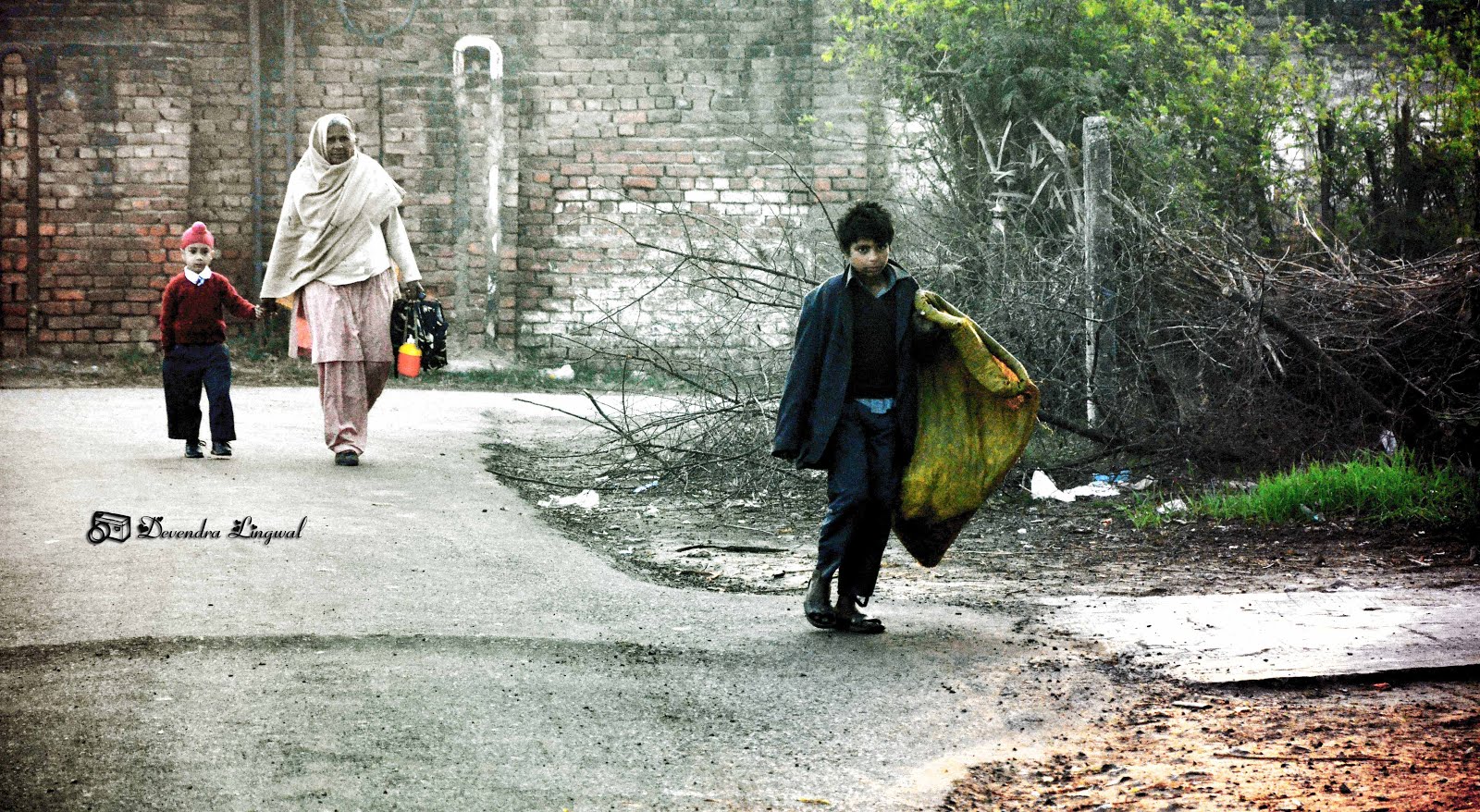
Path to Success
Devendra Lingwal

author
About Me


Subscribe To


 Posts
All Comments
Posts
All Comments
Popular Posts
-
 Parents' involvement in their child's education is a key factor in the child's scholastic success. It helps eliminate the...
 -
Panchayati Raj is a system of governance in which gram panchayats are the basic units of administration or in other words this system is the...
-
 A culture is a mirror of society in which we get the glimpse of the language, way of life, social activities, and history; namely the cultur...
 -
 I'm culpable of extraordinary naiveté, I suppose. But it's a naiveté that I really don't want to abandon, not even now or ever....
 -
Amongst the famous maxims of the French emperor Napoleon Bonaparte is, “Impossible is a word only to be found in the dictionary of fools.” B...
-
 We all have a pragmatic vision to seek and see justice done. Many a times individuals take the need to chastise those who have committed cr...
 -
 With the celebrating reverberations of the 4th anniversary of the Right to Information Act being heard across the country there’s much more ...
 -
Different people have portrayed the essence of love in a variety of related but distinct forms in different contexts. For some...
-
 Most countries across the world celebrated Labour Day on May 1, also known as May Day and International Workers' Day. Where on one side ...
 -
 I was ever a warrior, so, one war more. The best one and the last too. The bugle of war which the humanity inside me was procrastinating s...